Showing posts with label Space. Show all posts

Sunday, 2 December 2012

Inside the Space Shuttle Carrier Aircraft

This week, when the space shuttle Endeavour flies from Kennedy Space Center to Los Angeles and its new home at the California Science Center, it also means the retirement of the Boeing 747 Shuttle Carrier Aircraft (SCA) that has been responsible for transporting all the space shuttles for over 35 years.
Edwards Air Force Base in California has had both the responsibility and honor of being the home of the Shuttle Carrier Aircraft since the earliest days of the shuttle program. The team in charge of flying and servicing the two 747s is preparing to say their own goodbyes as the final ferry flights brings a shuttle back to the West Coast.

Read More

Discovering the World’s Astronomical Heritage


What places best describe humankind’s fascination with the universe?  Try Navajo star ceilings, the Temple of Isis in Egypt, or Stonehenge.  Maybe it’s Qing Dynasty instruments at the Beijing Ancient Observatory or mountaintop telescopes in Chile.  Austria even has a  and a dark-sky oasis.
Navajo star ceilings, like this one in Middle Trail Canyon, Arizona, consist of stars painted or stamped on overhanging ceilings of natural rock shelters. Photo © Von Del Chamberlain
These places are now recognized as astronomical heritage sites as part of a joint initiative of UNESCO and the International Astronomical Union.  Their newly launched Web portal—created to encourage discovery and discussion of our astronomical heritage through buildings, monuments, objects, and places—might leave you, well, a little starry-eyed.
What’s beautiful about browsing through the list of sites is how they connect a breadth of cultures across time and space.  You can pick up a bit of history reading through some of the general “heritage themes,” such as
Read More

Space Shuttle Atlantis Rolls to Retirement

Kennedy Space Center said goodbye to their final departing space shuttle orbiter on Friday, though Atlantis only had to travel 9.8 miles (15.8 km) to her new home just off-site in the process.
“It’s bittersweet seeing her go,” said one NASA employee, “but at least she’ll be nearby.”
The same can’t be said for the other two orbiters, Discovery already on display outside of Washington, DC, and Endeavour recently arrived in LA. This is the first time that Kennedy Space Center (KSC) has been without an orbiter since 1979.
Employees of Kennedy Space Center who worked with Atlantis for over 26 years walk behind her as she rolls past the Orbiter Processing Facilities that housed her for that time. Photo Credit: Jon Brack

Read More

A Grand Tour of the Universe

Venus Planetary Map
A map of Venus shows rough surface features named after goddesses or famous women (click to enlarge). MAP: National Geographic Maps. SOURCES: Magellan Synthetic Aperture Radar Mosaics, NASA, JPL, USGS
Armchair astronomers take note: This space atlas is for you.  Yes, that kind of atlas—a series of maps and
Read More

Organics Discovered on Mercury


Mercury-pole-zoom
The north pole of Mercury as seen by MESSENGER during a 2008 flyby. Credit: NASA
NASA dispatched the Curiosity rover to Mars to look for organics, but a probe orbiting Mercury has beaten it to the punch.
New results from the MESSENGER spacecraft not only confirm that the planet closest to the sun has ice inside shaded craters near the north pole, but that a thin layer of very dark organic material seems to be covering a good part of the frozen water.
Both likely arrived via comets or asteroids millions -- or hundreds of millions -- of years ago.
BIG PIC: Dark Shadows Freeze Mercury's North Pole
Unlike Curiosity, which will be directly sampling Martian rocks and soils to look for signs of organic material, MESSENGER bounces laser beams and counts neutrons and gamma rays to collect information remotely about chemical elements on Mercury’s surface.
The information is correlated with detailed topographical and temperature maps, laboratory tests and computer models and then compared with candidate materials to find the best match for the observed conditions.

Read More

Saturday, 1 December 2012

Some amazing facts about Solar Eclipse

Witnessing a Solar or lunar eclipse is always a very stunning experience for those who love to see miracles. By the Way how many of you have witnessed the most recent Solar Eclipse which occurred yesterday on May 20, 2012? Have you ever thought how this rare phenomenon occurs? Let us put some light on it.
What is Solar Eclipse:
A solar eclipse occurs when the moon comes between the earth and sun while revolving, and blocks the sun partially or fully. It occurs only on new moon and it blocks the light of sun to reach the earth. In fact, the moon and the sun are in conjunction as seen from the earth so the sun is completely invisible. The moon does not have its own light because it relies on Sun’s light reflected by earth, so it becomes dark during this whole process.
Eclipse types
Total Eclipse: When the sun is completely hidden behind the moon leaving a solar corona behind that is visible to naked eye.

annular-eclipse
Read More

What happens to Human body in space

In many Hollywood movies, you must have seen such scenes where an astronaut gets a hole in his special space uniform while he is in space and due to low pressure his body starts blowing like a balloon and can even explode.
Although the temperature in space is as low as freezing but there is also direct radioactive rays from sun that makes the environment of space very interesting and amazing. what really happens to human body and other masses in space? Lets have a look on it.
What will happen to Humans in Space:
Although the mixed environment of space is risky for Humans but they won’t be freeze because the heat of the body will not be transferred away from it.
Humans may also experience vomiting, headache and malaise due to motion sickness in space because they are totally weightless there.
If someone put off his helmet in space he would just remain conscious for a couple of seconds because there is no oxygen in space and when his blood without oxygen reaches his brain that will lead him to death.
What will happen to water in Space:
If you throw some water in outer space, first it will be boiled immediately because of the radiation known as Cosmic
Read More

Some cool facts about planet earth

Planet earth is the third planet from the sun and the only known planet having Life in it. It is the fifth largest planet of our solar system. In this post, we have tried to gather major components of earth along with all the facts and figures.
So lets explore the earth.
Facts and figures:
Name: Earth
Origin of Name: The word “earth” is derived from an ancient word “eorthe“. Eorthe means ground or dry land. The earth is the only planet in the solar system that is not named after the Roman or Greek gods. Earth is also known as Globe or World.
Situated in: Milky Way Galaxy
Mass of Earth: 5.9736×1024 or 5,973,700,000,000,000,000,000,000 kg
Current age of earth: about 4.5 billion years
What you find in planet earth:
29.2% Land
Read More

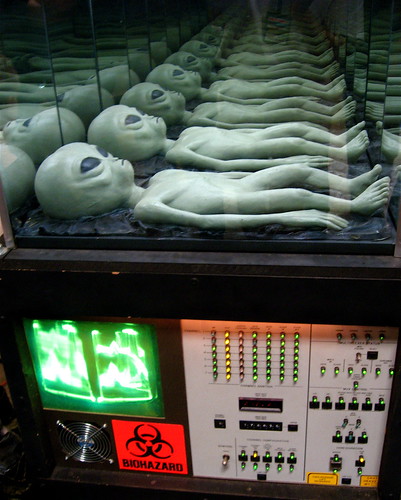
Does Aliens and UFOs exist?

AliensHow many of you believe that life exists on other planets and galaxies? Okay, tell me how many of you or your friends ever witnessed a UFO or an alien like man? Do you remember the famous Star Trek Series? Who was your most favorite character?
Well guys, today’s post is dedicated to world’s most asked question i.e does aliens and UFOs exist or not? So, here we go.

Aliens and UFOs

There are many studies conducted around the world on
Read More

17 cool facts about Neil Armstrong you must know about

Be it in any part of the world, the name of Neil Armstrong needs no introduction, having been the first human to set foot and walk on the moon.  This feat, way back in 1969, had made him a household name, which is preserved till date.  His words as he stepped on the moon, “That’s one small step for man, one giant leap for mankind” is equally popular and is considered as one of the best known quotes in English.

Here are some other facts about him, which everybody may not be aware of:
  1. His full name is Neil Alden Armstrong.
  2. Ohio is his place of birth and death.
  3. He had a fascination with flight at an early age and earned his student pilot’s license when he was mere 16.
  4. Other than an astronaut, he was also a test pilot, naval aviator, aero-space engineer and university professor.
Read More

Popular Posts